Ending the poolside towel wars
Every morning at TUI's sunniest resorts, guests race to drape towels over loungers at dawn, then disappear for hours. I built the strategy and prototype for a Digital Concierge that replaces manual towel reservations with a real-time, automated management system.
The friction
The “Dawn Rush”
Guests race to reserve loungers at dawn with towels — then vanish for hours. The loungers sit empty but “reserved,” the best spots vanish before breakfast, and families who can't sit together are the first to complain. Staff get caught refereeing disputes they have no tools to resolve. It's the holiday equivalent of road rage, and it shows up loud and clear in the guest data.
“Seat ghosting”: a lounger reserved free all day, but actually used for only ~3 of the 8.2 hours of sun. The culture is first-come-first-served — not active use.
Why it matters to TUI
The business context
TUI is the world's leading integrated tourism group, managing the whole journey from booking to flight, hotel, and cruise — its brand purpose is to “create the moments that make life richer.” Sun loungers sound trivial, but they sit right at the heart of the hotel experience that drives repeat bookings. A 12% complaint rate on something this visible quietly erodes the guest satisfaction TUI's growth depends on.
From TUI Group's 2025 financial highlights — protecting the hotel experience protects the profit engine.
The Northern region's hotel profitability fell 25.5%. A low-capex digital fix that lifts satisfaction is exactly the kind of lever that defends margins without heavy investment.
Three routes explored
Rather than jump to an app, I pressure-tested three phased options against budget, guest impact, and risk.
The “Fair Play” Policy
- Zero capital investment
- Immediate results
- Restores fairness
- Conflict potential
- Labour intensive
- Perception risk
The Digital Concierge App
- Automated fairness
- Live availability
- No confrontation
- Boosts revenue
- Admin heavy
- Added complexity
Premium “Family Cabana” Rentals
- Guaranteed peace of mind
- New revenue stream
- Frees the main deck
- Space constraints
- £6,250 up-front each
- Doesn't stop ghosting
The Digital Concierge wins: it shifts the burden from staff to system, scales across resorts at low capex, and is the only option that turns the friction itself into measurable revenue. Fair Play becomes its day-one rule; cabanas become a later upsell.
The solution — Digital Concierge
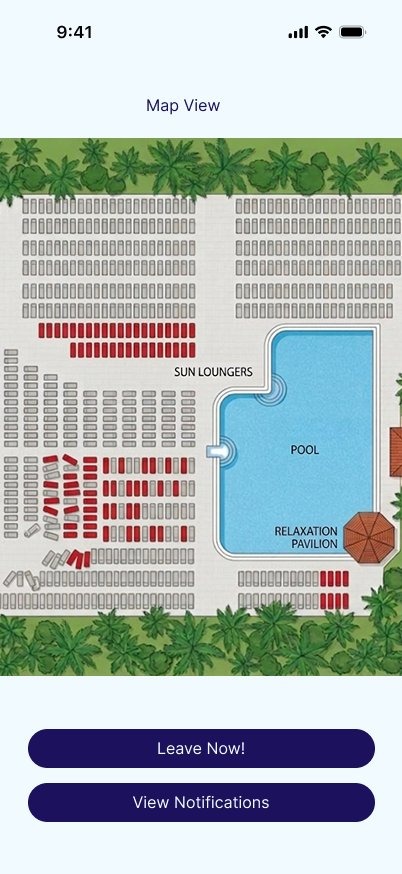
A live “Lounger Map” inside the TUI ecosystem. Guests check in by QR, get two free hours, and a gentle nudge before time's up. The system enforces fairness automatically — no staff confrontation, no dawn rush.
Before · the friction
- ✕ Towels claim empty loungers all day
- ✕ Staff stuck refereeing disputes
- ✕ Best spots gone before breakfast
- ✕ 12% of complaints, every season
After · the flow
- ✓ Live map shows what's truly free
- ✓ System reclaims expired loungers
- ✓ Fair 2-hour access for everyone
- ✓ Friction becomes a premium service
Live Pool Map
Real-time view of every free, occupied, and expiring lounger.
QR check-in
Tap a lounger's QR to claim your two free hours instantly.
Expiry nudges
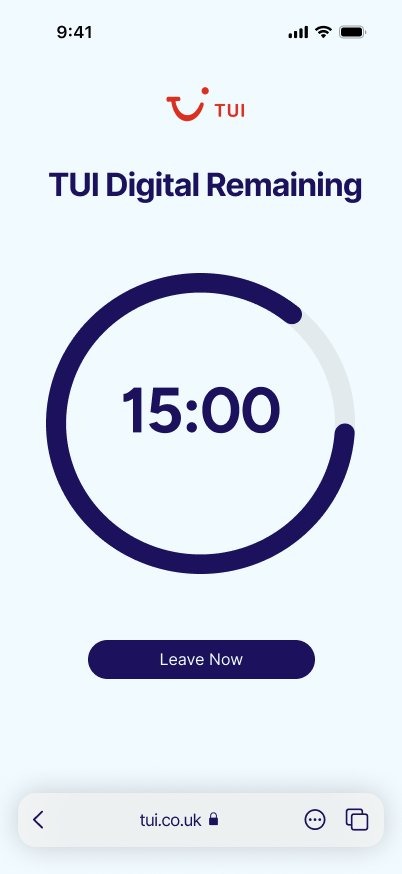
Friendly notification before your time runs out — renew or release.
Automated fairness
The system, not a staff member, reclaims ghosted loungers.
Family Sync
Book adjacent loungers together so families never split up.
Heat-map analytics
Occupancy data helps managers staff and price by demand.
Poolside ordering
Order snacks and drinks to your lounger without losing your spot.
Staff turnover view
A live map lets staff spot vacated loungers and reset them fast.
How it works
Strategic shift: instead of a standalone app, the concierge lives inside TUI's existing infrastructure — cutting build cost and meeting guests where they already are.
Scan the QR
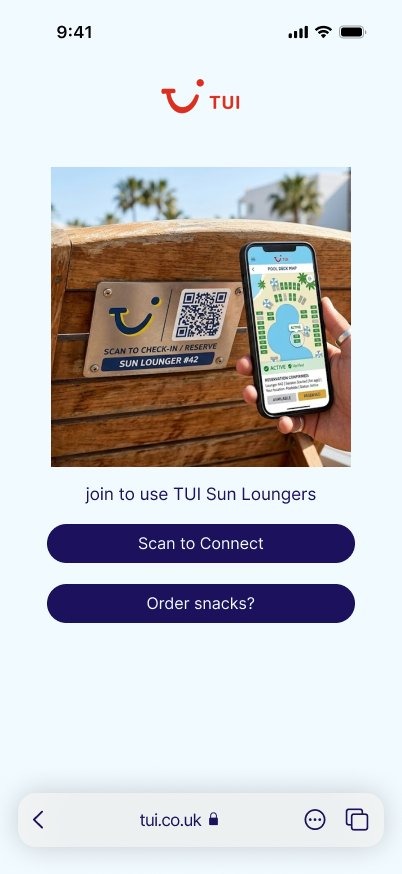
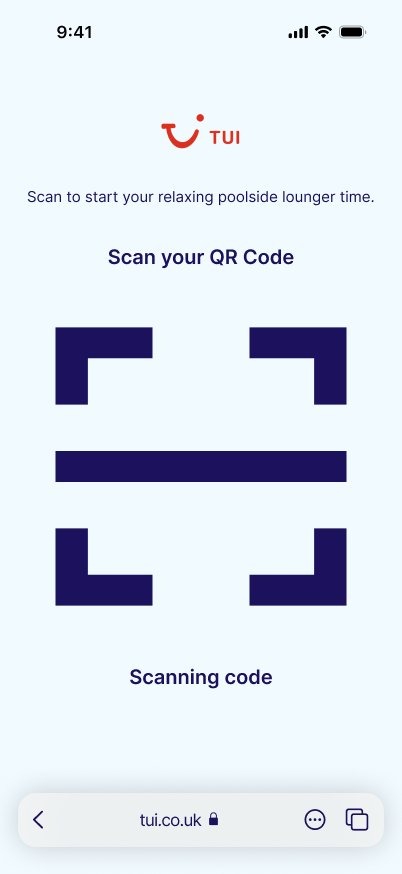
Each lounger has a QR. Scanning deep-links to the TUI app if installed, or opens the browser — no download required.
Universal login
Guests sign in with room number + last name, unifying every profile across the TUI ecosystem.
Claim & enjoy
Two free hours start. The live map updates instantly so others see what's genuinely taken.
Auto turnaround
A nudge before expiry lets guests renew or release; staff see vacated loungers in real time.
Projected impact
By moving from “first come” to “active use,” the concierge defends retention while opening new, high-margin revenue — at low capital cost.
A £6,250 cabana yielding ~£50 a day recovers its cost in about 125 days — then it's pure margin. The concierge turns guest friction into a self-funding asset that protects and restores regional profitability.
The £60,000 build
A lean budget for a regional rollout, weighted toward the software that does the heavy lifting.
The app
The high-fidelity prototype brings the concierge to life: scan a lounger, watch the live map, track your two hours, renew with a tap, and order to your seat — for guests and staff alike.
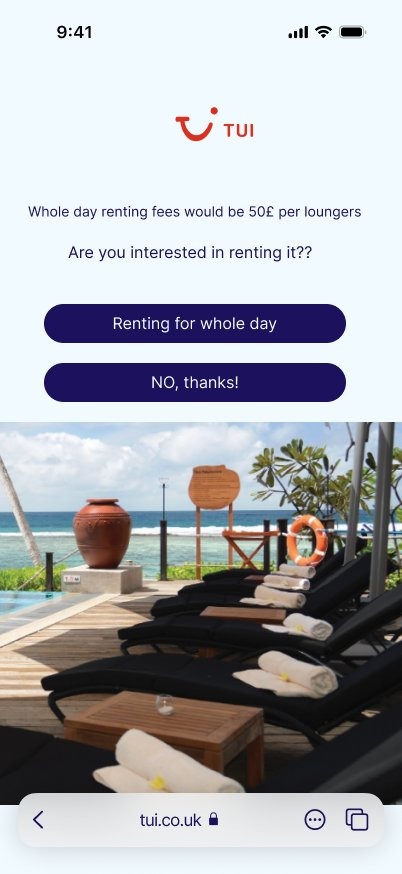
Let's turn the app vision into reality.
From a 12% complaint rate to a self-funding premium service — that's how you defend a holiday.
Hsu Yee Mon (Mavis) · UX & Product Strategy