Turning paper loyalty cards
into a sweet digital habit
Yowza's customers kept losing paper stamp cards and missing out on rewards. I designed an end-to-end mobile app that replaces those cards with a digital rewards tracker, a built-in wallet, and an interactive menu — making every visit easier to come back to.
Overview
The problem
At Yowza's physical stores, loyalty ran on paper stamp cards. Customers regularly lost or forgot them, lost track of how close they were to a free dessert, and rarely heard about promotions until they were already at the counter. Paying and topping up was manual and slow. The result was a loyalty programme that quietly leaked the very engagement it was meant to build.
The goal
Replace the paper card with one playful, on-brand app that brings rewards, payments, and promotions into a single place — so customers can track stamps, redeem treats, top up a wallet, and discover offers without friction.
Brand-aligned design
Fun, vibrant and effortless to navigate.
Rewards system
Collect 18 stamps to earn a free dessert.
Mobile wallet
Quick pay, top-ups and gift-card sharing.
Personalization
Allergy filters and tailored offers.
I followed a five-stage, user-centred design process — moving from understanding the customer through to testing and iterating the final product.
Discover
- User interviews
- In-store observation
- 20-person survey
Define
- Persona
- Pain points
- Empathy map
Ideate
- User flows
- Information architecture
- Sketches
Design
- Wireframes
- UI & design system
- Prototype
Test
- Usability study
- Findings
- Iteration
An eight-week project, split into a research-led first half and a design-and-test second half.
Understanding the user
Research approach
I ran 20 interviews with regular Yowza customers and spent time observing behaviour in-store — watching how people tracked stamps, asked staff about rewards, and paid at the counter. A 20-person survey then helped me measure how widely those frustrations were felt. The recurring theme was clear: the paper loyalty card was doing more harm than good.
What surprised me
I expected the headline ask to be faster payment. It mattered — but the deeper frustration was emotional. Losing a paper card didn't just cost a free dessert; it felt like throwing away progress people had earned visit by visit. That reframed the brief: the rewards tracker wasn't a nice-to-have, it was the heart of the product.
The survey confirmed which frustrations were most widely felt — and pointed straight at the rewards tracker as the feature to get right first.
What frustrated customers most
Key survey findings
- ✓4 in 5 had lost or forgotten a stamp card at least once.
- ✓Most couldn't say how many stamps they currently had.
- ✓Nearly all wanted rewards, wallet and offers in one place.
- ✓A digital tracker was the single most requested feature.
Lost & forgotten cards
Customers regularly misplaced paper stamp cards, wiping out weeks of progress.
Confusing tracking
Hard to tell how many stamps were left, so a free dessert never felt within reach.
Invisible promotions
People only found offers from posters or staff — often after ordering.
Slow payment
Paying and topping up at the counter added friction to a quick, fun treat.
Easily track rewards and redeem free desserts, discover new offers quickly, and pay fast and contactless.
Loses or forgets her paper loyalty card, doesn't know when new offers drop, and finds paying at the counter slow.
One app that combines rewards, wallet and offers, with personalised recommendations and simple navigation.
Stepping into Emma's shoes across a typical visit — what she says, thinks, does and feels around loyalty and payment.
- "I always lose my stamp card."
- "Is there a deal on today?"
- "How many stamps do I have left?"
- Am I close to a free dessert?
- I hope I didn't miss an offer.
- Paying should be quicker than this.
- Asks staff about rewards at the counter.
- Keeps a paper card tucked in her purse.
- Checks social media for promotions.
- Frustrated when progress is lost.
- Excited by a treat and a good deal.
- Unsure whether a reward is close.
Design opportunity: the mood drops the moment loyalty enters the picture. If the app makes stamps, rewards and offers visible and effortless — right where Emma already is — the whole visit stays joyful.
Starting the design
Everything fans do is organised into five clear areas — mirrored in the bottom navigation — so scanning, paying, and exploring offers are always one tap away.
- Featured offers
- Nearby store
- Quick actions
- Personalised feed
- Stamp card
- Scan code
- Progress to 18
- Redeem a treat
- Balance
- Top up
- Quick pay
- Gift a card
- Browse desserts
- Allergy filters
- Item detail
- Add to order
- Account
- Offers & history
- Preferences
- Settings
The core loop turns a purchase into visible, rewarding progress.
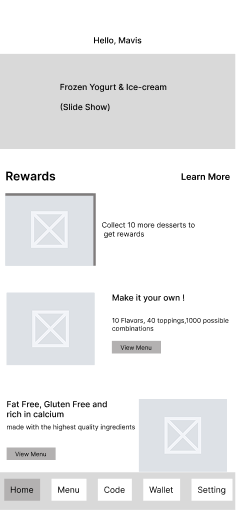
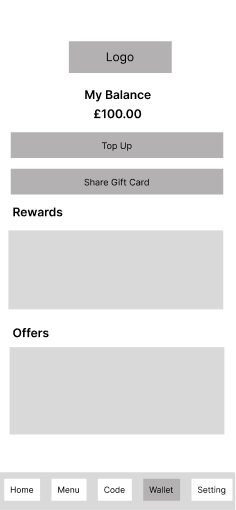
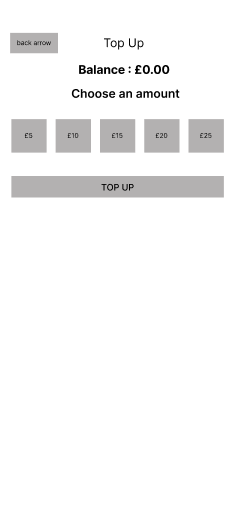
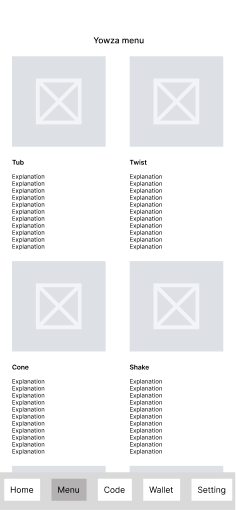
Before any visual styling, I sketched the core screens as low-fidelity wireframes to test structure and flow — home, rewards, wallet and menu — and mapped each one-to-one to the final designs.
Refining the design
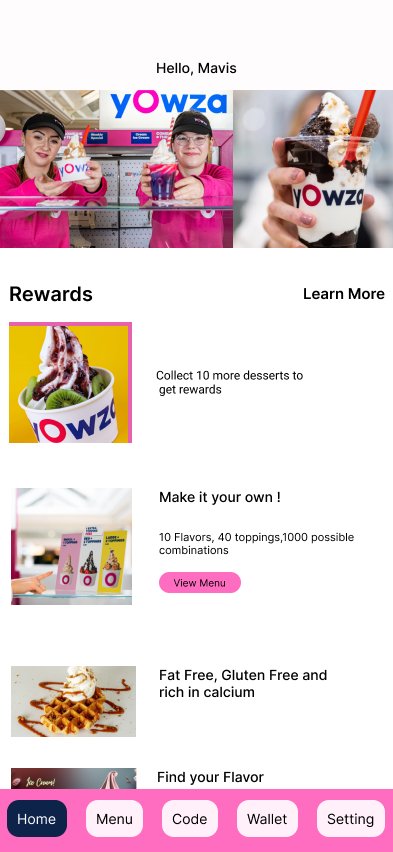
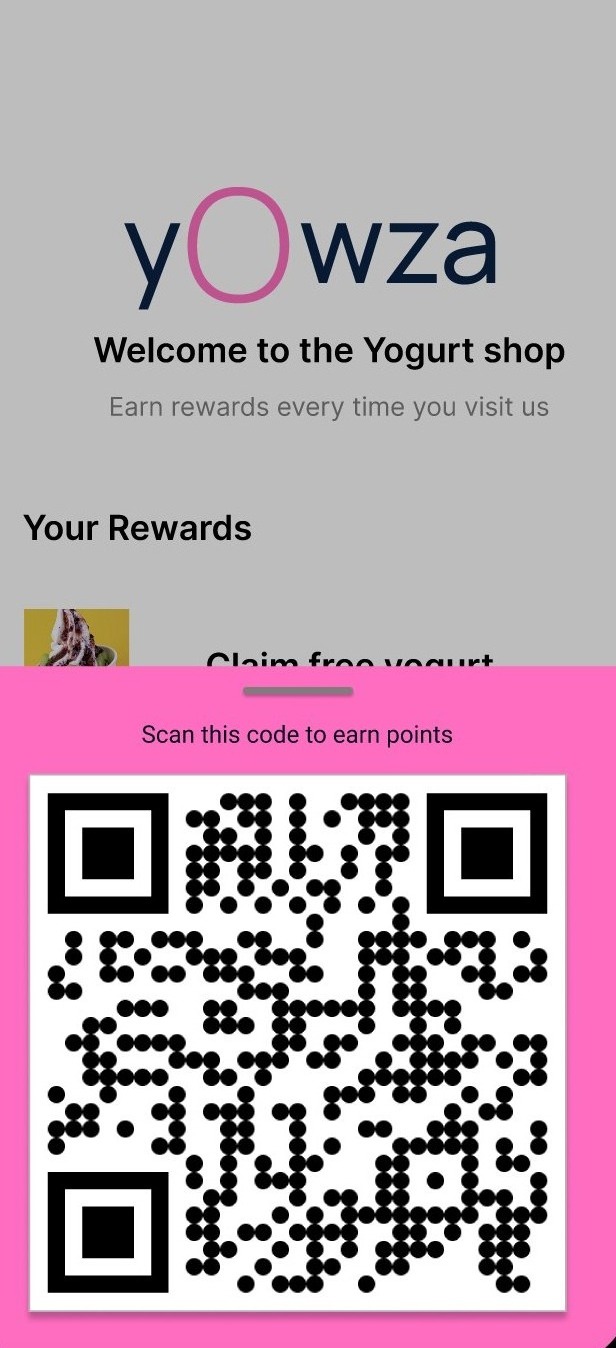
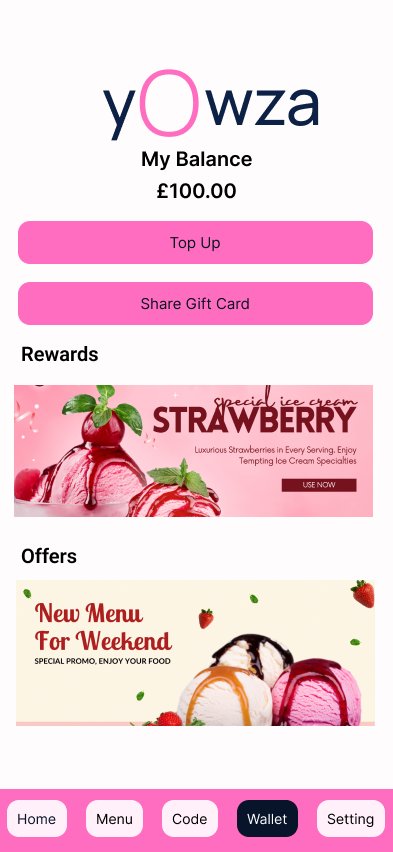
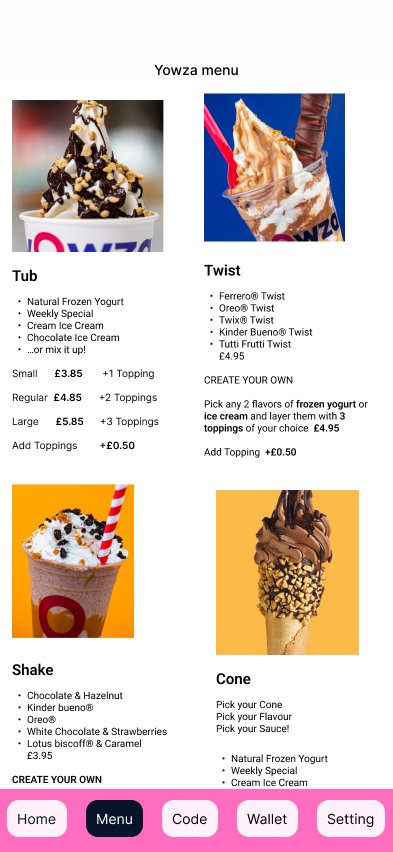
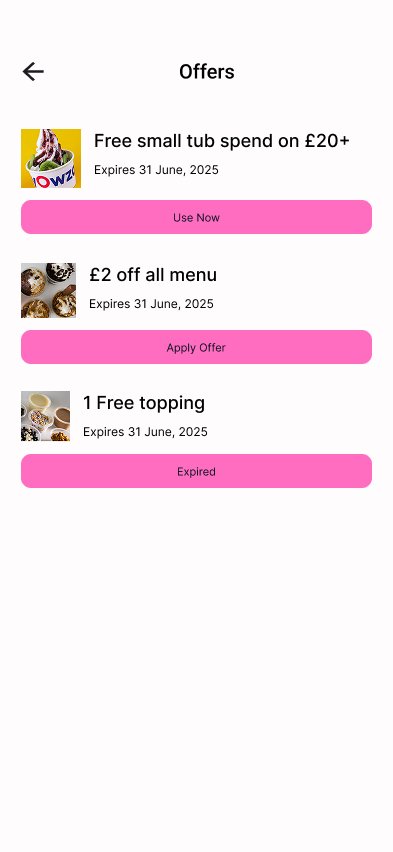
A vibrant home feed, scan-to-earn rewards with clear stamp progress, a wallet for top-ups and gift cards, and an interactive menu — all wrapped in Yowza's signature pink-and-navy identity.
Digital rewards tracker
Every scan adds a stamp with a visible countdown to 18. Progress is always on screen, so a free dessert never feels out of reach.
Built-in wallet
Top up, quick-pay at the counter, and check your balance in seconds — no fumbling for cash or cards.
Share a gift card
Send credit to a friend by name and email, turning Yowza loyalty into something social and shareable.
To keep Yowza playful but consistent, I built a small design system: a sweet-shop palette, a clear type scale, and reusable components for cards, buttons, and the wallet.
Usability study
I tested the high-fidelity prototype with 5 regular customers on four core tasks — register & log in, check rewards, top up and pay, and find and redeem an offer.
Digital beat paper instantly. 4 of 5 users understood the rewards system right away and called it far more convenient than a stamp card.
Top Up was hard to spot. Several users missed the button at first, so I increased its visibility and moved it to a clearer position.
All-in-one felt “clean & modern”. Combining wallet and rewards was the most praised idea — it made the app feel current and trustworthy.
Onboarding needed signposting. Minor first-run confusion led me to add guided tooltips that introduce scanning, rewards and the wallet.
What I learned
Research earns you the right to design.
The strongest decisions in this project came straight from listening. Talking to customers who'd lost their cards reframed the whole brief — payment speed was real, but the emotional weight of lost progress was bigger. I learned how much clear navigation and information architecture carry usability, how a single misplaced button can derail a task, and how much a tight feedback-and-iteration loop sharpens the end experience. Most of all, I practised balancing what users need with what the business — more visits, more loyalty — needs too.
Next steps
Ship & measure
Launch the MVP and track reward redemption, wallet top-ups and repeat-visit frequency against the paper baseline.
Grow the rewards
Add reward tiers, birthday treats and a referral loop to deepen loyalty once the core habit is established.
Accessibility pass
Run a full accessibility audit — contrast, tap targets and screen-reader labels — before a public release.
Thanks for reading.
Yowza Desserts — paper cards out, sweet digital loyalty in.
Hsu Yee Mon (Mavis) · UX/UI Designer